 HeChuang
Put your hand near the lid and nothing happens. Or the opposite: the lid fires open when you walk past at two in the morning. Either way, a smart trash can that misbehaves is the quickest way to lose a customer’s trust. For brands that buy these by the container, sensor failures are the reason returns happen. This guide walks you through why smart trash can sensors stop working, how to tell which part actually failed, and what to ask a supplier before you commit.
Why the Sensor Is Usually the First Part to Fail
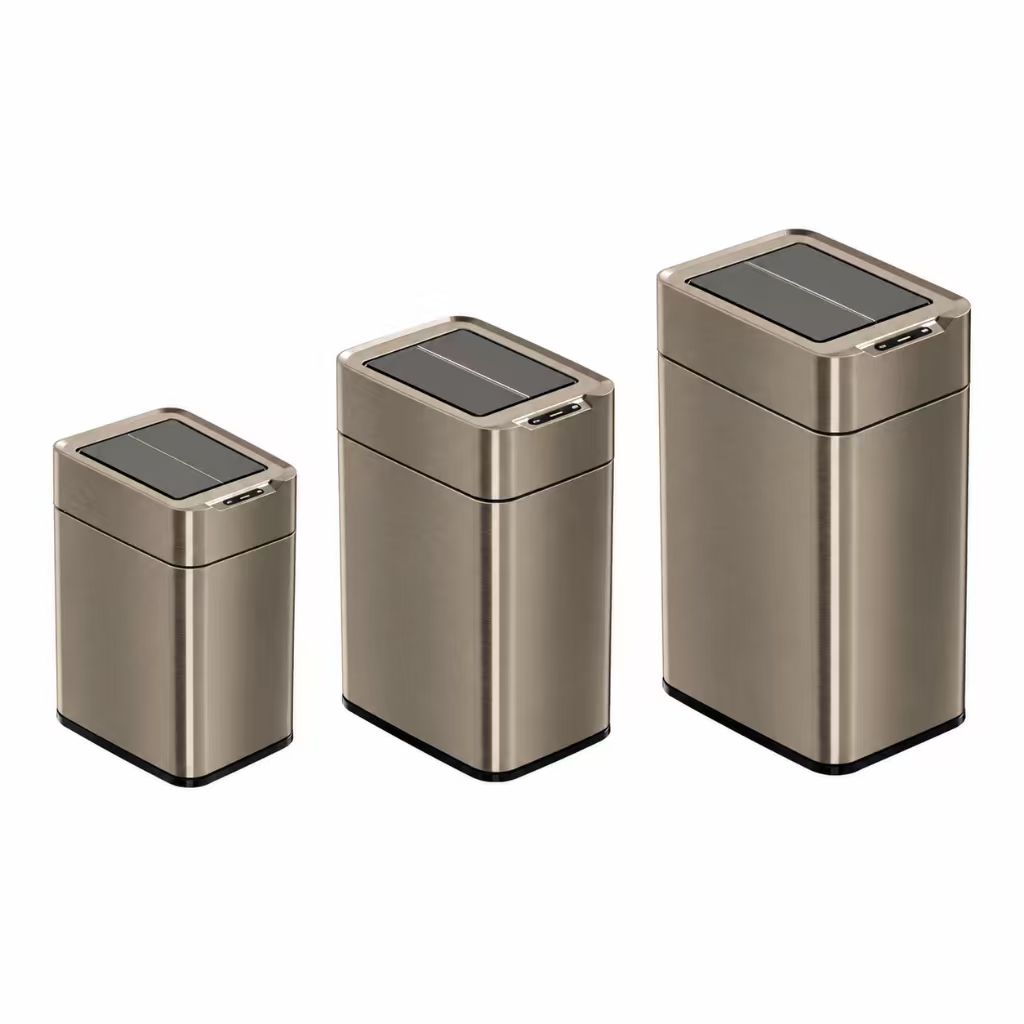
A sensor trash can has three opening methods: automatic by infrared sensor, a manual button, and on some models a kick-to-open foot trigger. The infrared sensor is the component buyers worry about most, and for a good reason. It is an electronic part sitting at the front of a product that gets touched, bumped, and spilled on. If something is going to fail, it usually fails there first.
But here is the part most importers miss: a “dead sensor” is often not the sensor at all. It is the battery, a dirty sensing window, or a loose connection. If you replace the sensor before checking those, you fixed the wrong part. This matters even on a brand-new unit, because it shipped from the factory working; the failure arrived somewhere between the warehouse and the customer’s kitchen.
What “Not Working” Actually Means
Different faults need different fixes. Before you panic or file a claim, figure out which symptom you are seeing.
The lid does not open at all. Usually power. Either the batteries are drained or the power contacts are corroded or loose.
The lid opens too slowly. Often a weak battery, a worn motor, or a clogged mechanism. It can also be the sensing window, if the sensor only catches part of the movement.
The lid opens on its own. A false trigger. Light, heat, another sensor, or an object drifting into the sensing range can set it off.
The lid opens sometimes, not always. Intermittent, and the hardest to chase. Start with the window, then the connection, until it gets consistent.
Each symptom points in a different direction. That is why good troubleshooting starts with what you observe, not with replacing parts.
The 4 Most Common Causes of a Sensor Trash Can Not Working
1. A drained or failing battery. The easiest thing to check and the most common culprit. On a typical unit, a full charge or fresh batteries last roughly two to three months, depending on how often the lid opens. The first sign is usually a slower lid long before it stops completely.
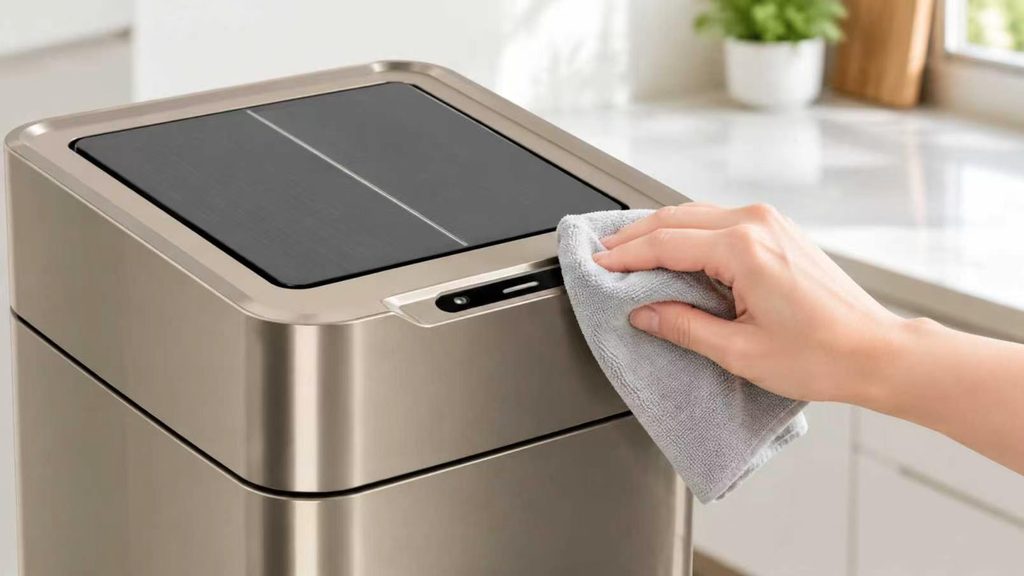
2. A dirty or blocked sensing window. The infrared sensor reads through a small window on the front of the lid. Grease, dust, cooking splatter, or a leftover shipping sticker can block it. A window that is 80 percent clean still triggers false or misses triggers you expect.
3. A false trigger from the environment. Infrared sensors react to heat and moving objects. A sunny window, a nearby appliance, or a person crossing the room can all register as an approach. Some of that is normal; a lot of it means the window is misaligned, the sensitivity is set high, or the unit is placed in a busy spot.
4. A loose connection or worn mechanism. The sensor board, the motor, and the power leads sit inside a product that gets knocked around. A plug that worked at the factory can work its way loose in transit. The hinge and kick-to-open foot trigger on some models can also pick up debris.
How to Troubleshoot a Sensor Trash Can: A Step-by-Step Self-Check
Walk through this sequence before you report a fault. Most of the time it fixes it, and when it does not, you will have a much more useful description for whoever is helping you.
Step 1: Replace or recharge the power and clean the contacts. Check the battery compartment for corrosion. Fresh batteries or a full charge fixes a surprising number of units.
Step 2: Wipe the sensing window clean. A soft, dry cloth over the window removes grease and dust. While you are there, check the kick-to-open panel and the button are not jammed by debris.
Step 3: Look at what is in front of the sensor. A hand should trigger it within roughly 25 cm. Move lamps, plants, or anything that drifts into that range and test again.
Step 4: Test it in a low-light room with no heat source nearby. If it behaves there but misbehaves in the kitchen during the day, you are probably looking at a false trigger, not a dead unit.
Step 5: Take a short video of the exact behavior. A 30-second clip of “opens on its own” or “slow to open” tells a support team more than a chat message ever will.
If all five pass and it still fails, you have a unit-level fault. That is when warranty and shipping terms matter, which is why you should touch that topic before you order, not after.
How Factory QC Catches These Before Shipment
Good prevention starts at the factory line, not at the customer’s door. That is why a supplier’s quality control process matters as much as the unit price. The checks worth asking about are the ones that test the sensor, not just the looks.
Make sure the factory runs a real functional check on every unit. For an infrared sensor trash can, that means testing the sensing range (about 25 cm) and the opening response (about 0.2 seconds) as the lid is opened and closed. A factory that only inspects the outside by eye can ship a lid that looks perfect but never opens.
On a production line worth its price, the sensor check should be part of a repeatable sequence: incoming component inspection, first-piece confirmation, in-line checks, a full functional test on every unit, aging or soak testing, and a pre-shipment inspection. If you want the details on what each step actually checks, our smart trash can sensor testing guide explains it. When you compare suppliers, this is the difference between a device that works on day one and one that still works months later.
What to Ask a Supplier About Warranty and Spare Parts
Even a well-built unit can fail in transit or after rough handling. The question is not whether it never happens, but what happens when it does. Both should be in writing before you place the order, not after a problem shows up.
Ask for the warranty term in your contract. As an example, HeChuang Tech provides a 12-month warranty on its smart trash cans, and ships about 2% of the order quantity as spare replacement parts. That spare stock covers the common failures in the field without you waiting on a cross-border shipment for every fix. If you run through your spare parts faster than the average, most suppliers can also sell the components separately, so confirm the price and availability up front.
Two things protect you as a buyer. First, a written quality standard and AQL in the contract, so both sides agree on what “acceptable” means. Second, spare parts and a warranty that are real, not vague. A supplier who dodges these questions is a bigger risk than one who gives you a slightly higher FOB price and a straight answer.
Frequently Asked Questions
Why does my smart trash can open randomly?
That is usually a false trigger. Move heat sources, bright light, and moving objects out of the roughly 25 cm sensing range, and clean the sensing window. If it still opens on its own, the sensitivity or sensor alignment may need attention.
Why is my smart trash can not opening at all?
Start with power: replace or recharge the batteries and check the contacts for corrosion. Next, clean the sensing window. Then verify nothing blocks the lid mechanism. If the manual button or kick-to-open also does nothing, it is more likely a unit-level fault than a sensor issue alone.
How long should a smart trash can sensor last?
With the battery maintained and the window kept clean, an infrared sensor built into a properly tested unit reliably handles normal daily use for a long time. Reputable suppliers back that with a written warranty, so ask for the term instead of guessing at a number.
Do you replace a faulty sensor or send spare parts?
Under a typical warranty, the supplier replaces the faulty unit or sends the relevant spare part. With spare parts included in the shipment, most field fixes are handled without waiting for a cross-border delivery. Confirm the exact replacement process and the spare-parts price in writing before you order.
Is a no-sensor manual trash can more reliable?
A simpler unit has fewer electronics to fail, which is why some buyers choose a touchless-foot or press-pedal model for heavy-duty use. But a well-tested modern infrared model is reliable too, as long as the factory actually tests every unit. The trade-off is convenience versus simplicity, and it depends on how the product is used.
Do I need to worry about Bluetooth or Wi-Fi models?
Not with an infrared-only smart trash can, because there is no wireless module at all. That keeps the unit simpler and avoids the extra compliance paperwork some wireless devices need. If a supplier pushes a smart-home model with networking, the wiring, testing, and certification requirements change.
What should I do before contacting the supplier about a fault?
Replace or recharge the batteries, clean the sensing window, clear objects from the sensing range, and capture a short video of the exact behavior. Send that with your order number and model. It gets you a faster answer than a vague description.
Get Help With Your Next Order
A reliable order starts with the right questions. If you want to check a specific model’s sensing range, testing process, warranty, and spare-parts plan, HeChuang Tech runs a 30,000 m2 smart trash can factory with CE, FCC, and RoHS certifications and can walk you through it. Browse the range on our products page or contact us with your target market, and we will reply within 24 hours.
Leave a Reply