 HeChuang
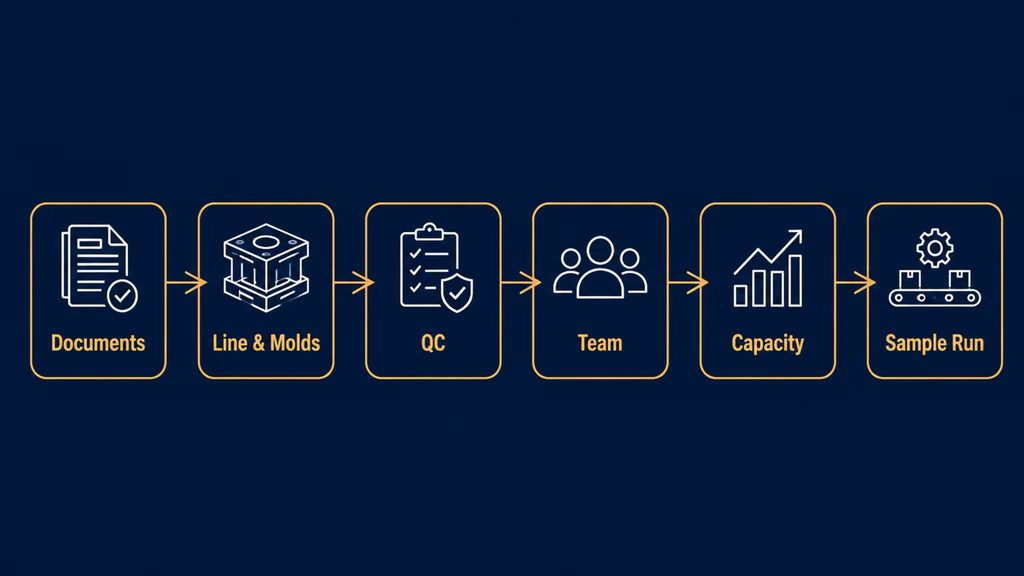
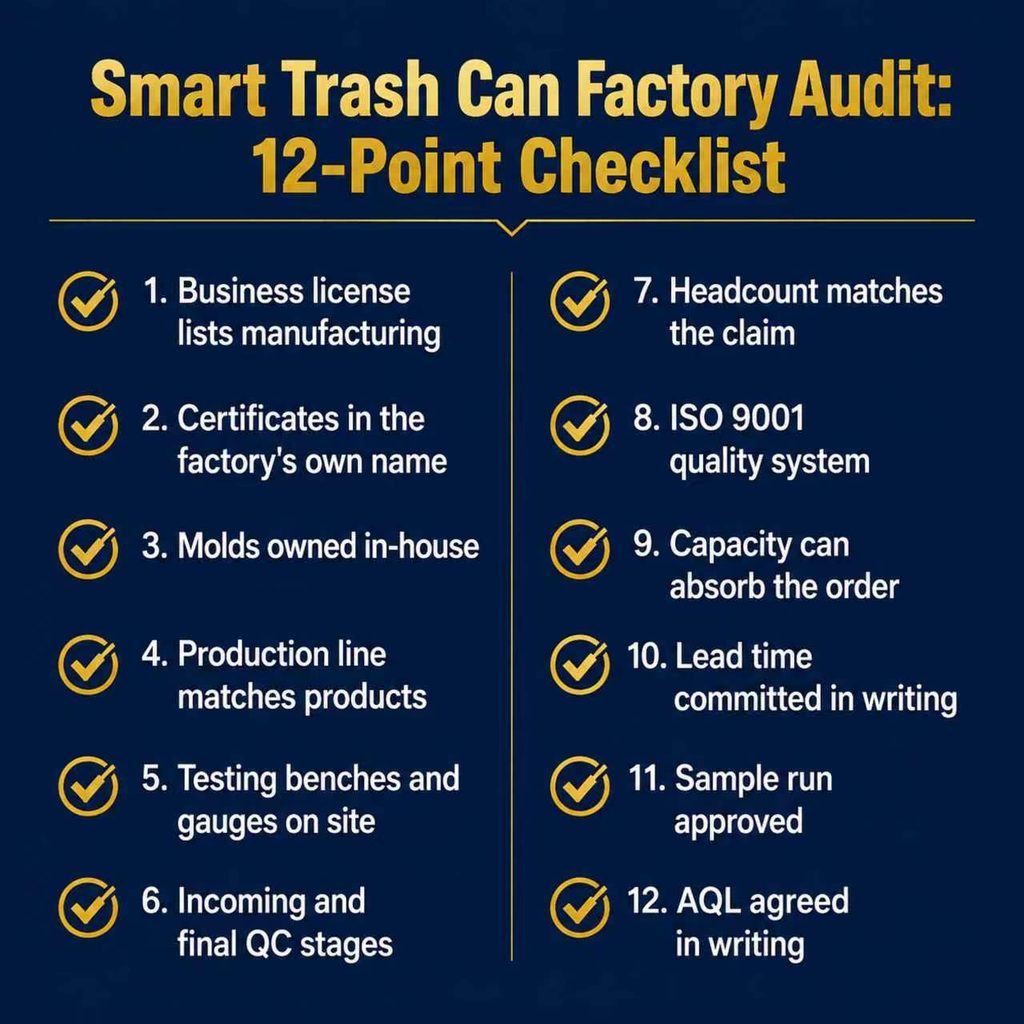
A factory audit sounds heavy, but it is really just twelve checks spread across six stops. This smart trash can factory audit checklist turns a nervous afternoon in someone else’s workshop into a methodical pass or fail. Use it before you pay a deposit, and you will catch problems while they are still cheap to fix.
How to Use This Smart Trash Can Factory Audit Checklist
Work top to bottom and mark off the two checks at the end of each section as you go. Print the scoring table at the end and fill it in while the visit is still fresh. If you can tick every box with confidence, you are ready to move forward.
Check the Documents First
The paperwork tells you what the factory is legally allowed to do.
Ask for the business license and export registration before you walk the floor. A license that lists manufacturing is what you want; one that only says trading means you are dealing with a middleman, no matter how good the showroom looks. Certificates follow the same rule. CE, FCC, and RoHS reports should carry the factory’s own name, not a trading company’s.
Still narrowing your list? Our guide on choosing a smart trash can manufacturer covers the questions to ask on the first call.
- Business license lists manufacturing, not trading
- CE / FCC / RoHS reports in the factory’s own name
Walk the Production Line and Molds
The floor tells you more than any brochure.
A factory that owns its molds can re-run your order without surprises. One that borrows molds from another plant adds risk and delay, and a mold transfer in the middle of production is the kind of surprise you do not want. Walk the line and check whether the machines match the products they claim to make. Injection machines, assembly stations, and testing benches should be running, not parked for show.
If you plan private label or full custom design, the OEM/ODM page shows what most factories can change.
- Molds are owned in-house, not borrowed
- Production line matches the products they claim to make
Inspect the QC Equipment and Process
QC equipment is only useful if the process actually uses it.
Look for testing benches, gauges, and sensor testers, then ask how often they are used and who is responsible for them. A serious factory checks incoming parts, checks again on the line, and does a final check before packing. Also ask who the QC manager reports to, because a QC team that answers to the sales manager will not stop a bad batch. If the QC room looks like a museum with dust on the dials, that is your answer. For the sensor-specific checks, our QC testing article lists what a good factory runs on every batch.
- Testing benches, gauges, and sensor testers on site
- Incoming, in-process, and final QC stages
Look at the Team and Management
A full workshop with no management system is still a gamble.
Ask for the headcount, then count the people you actually see. A factory that claims 150 workers should feel busy, not like a warehouse with a few friends helping out. Also ask whether they run an ISO 9001 quality system, because a documented process beats a manager’s memory when things go wrong. The standard matters less than whether they actually follow it.
- Headcount matches what they claim
- ISO 9001 or a documented quality system
Verify Capacity and Lead Time
Capacity on paper and capacity this month are two different things.
Ask how many lines they run and what they are producing right now. A factory running at around 70 percent capacity can take your order without slipping the schedule. Get the lead time in writing, and ask what happens when a big order lands on top of yours. Also ask what their busiest month looks like, because a factory that is always at 110 percent will not protect your delivery date. A realistic answer beats an eager one every time, because the eager answer is usually the one that slips.
- Current capacity can absorb your order
- Lead time committed in writing
Ask for a Sample Run or Trial Production
A sample run is the cheapest insurance you will ever buy.
Before the main order, ask for a small trial run or a pre-production sample. Agree on the acceptable quality level, or AQL, so ‘good enough’ means the same thing to both of you. That one number turns an argument into a decision. Sampling by an accepted standard like ISO 2859-1 keeps the inspection fair and repeatable.
- Pre-production sample or trial run approved
- AQL and sampling standard agreed in writing
| Audit area | Weight | Your score (1–5) |
| Documents and licenses | 20% | |
| Production line and molds | 15% | |
| QC equipment and process | 25% | |
| Team and management | 10% | |
| Capacity and lead time | 15% | |
| Sample run | 15% |
Score each area from 1 to 5. Anything under 4 needs a fix before you send the deposit.
Red Flags to Watch For
Some warning signs are easy to spot if you know what to look for.
- They refuse a video call or an on-site visit
- The license says trading but they claim to be a factory
- The QC room is dusty or unused
- They cannot show molds or testing equipment
- Lead time is a vague promise, not a number
- They push you to pay before the sample run
Frequently Asked Questions
How long does a factory audit take?
A focused audit takes half a day to a full day on site. A third-party auditor with the right checklist can do it in a few hours. Leave time for the document review, a walk of the production line, the QC room, and the warehouse. Ask to see the line running rather than stopped, because a live line is harder to fake.
Should I do the audit myself or hire a third party?
For a first order, a third-party audit is worth the money because it removes the emotion. You can do a basic version yourself, but an independent auditor is better at spotting faked paperwork and the quiet problems a factory will not volunteer.
What is AQL in a factory audit?
AQL stands for acceptable quality level. It is the worst defect rate you are willing to accept in a batch. Agreeing on it before production turns ‘good enough’ into a measurable standard both sides can point to.
What is the most important part of a smart trash can factory audit?
The QC process. Documents and capacity matter, but the QC room shows whether the factory actually controls quality or just talks about it. A good QC process catches a bad batch before it ships.
Can I audit a factory before paying the deposit?
Yes, and you should. Most serious factories welcome an audit before money changes hands. A factory that refuses a visit or a video tour before the deposit is already telling you something.
Get a Factory-Direct Quote
A smart trash can factory audit checklist is not about being suspicious; it is about being precise.
Need a factory that passes the audit the first time? HeChuang Tech runs a 30,000㎡ factory with 43 production machines, 150+ staff, and CE/FCC/RoHS certificates. Send your spec through the contact page and we will walk you through the answers before you book the flight.
[…] big red one. So trust the pattern more than any single item. Once a factory passes this screen, our factory audit checklist walks through what to inspect […]