 HeChuang
INTRODUCTION — WHY CHOOSING THE RIGHT FACTORY MATTERS
I have seen it happen more times than I would like to count.
A buyer finds what looks like a great deal on sensor trash cans from a supplier on Alibaba. The photos look professional. The price is aggressive — maybe 15% below what other factories quoted. The sales rep responds quickly, speaks decent English, and promises delivery in 25 days.
Then the problems start.
The pre-production sample arrives and the stainless steel has a faint yellow tint that was not visible in the photos. When the buyer asks for a video of the production line, the supplier sends a shaky clip of what looks like a different factory. The delivery date slips — twice. By the time the shipment finally arrives, 45 days late, the cartons are damp and three units out of every hundred do not power on.
This is not a hypothetical. It is a composite of real situations I have watched unfold over a decade in the smart trash can manufacturing industry. The frustrating part? Most of these problems are avoidable — if you ask the right questions before you place the order.
Here is what I tell every first-time buyer: sourcing a smart trash can manufacturer in China is not about finding the lowest price. It is about finding a partner who can deliver consistent quality, on time, with the documentation your market requires. The five questions below are the ones that separate legitimate factories from trading companies posing as manufacturers.
QUESTION 1 — ARE THEY ACTUALLY A FACTORY? VERIFYING A CHINA MANUFACTURER
This sounds basic. It is not.
A surprising number of “manufacturers” on B2B platforms are trading companies that do not own a single injection molding machine. They take your order, mark it up, and subcontract to whichever small workshop offers the lowest quote that week. When something goes wrong, they have no leverage to fix it — and no factory to show you.
So how do you verify? Let me give you the methods that actually work.
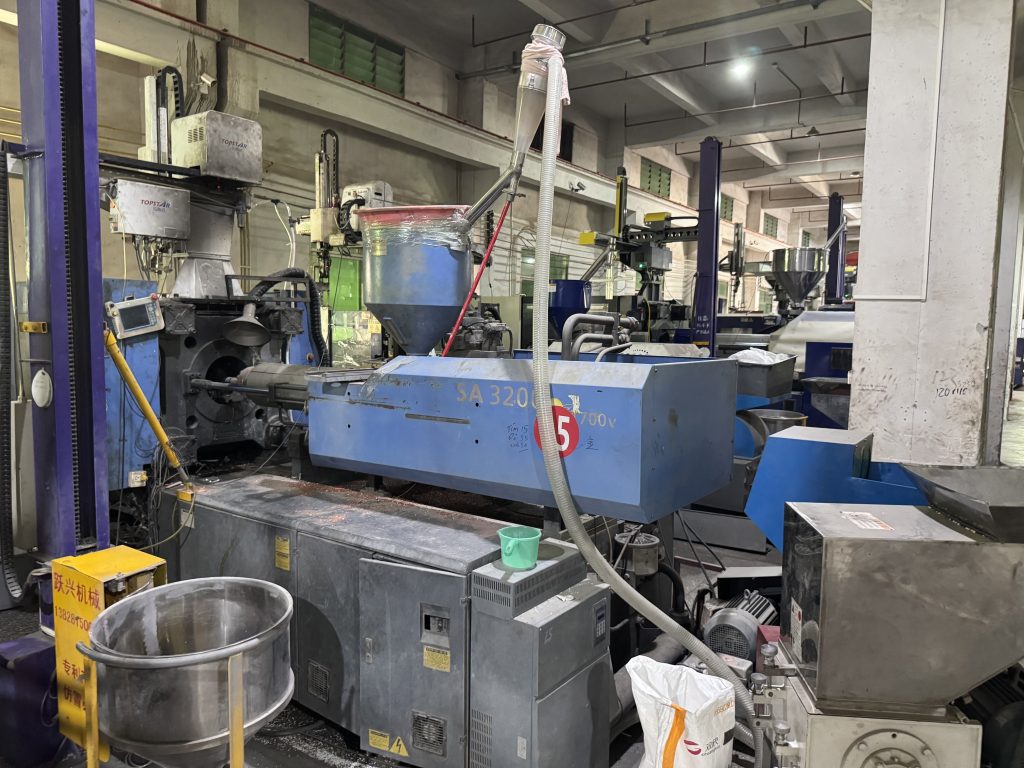
A live video tour is your best first move. Not a pre-recorded promotional clip — a real-time walkthrough on WhatsApp or WeChat. Have them show you the injection molding area, the assembly line with workers actively building units, the sensor testing station, and the finished goods warehouse. A smart trash can factory should have all four of these areas visible in a single facility. If they cannot do a live tour within 24 hours of your request, that is a red flag.
Another check that costs you nothing: ask about their production line count. A dedicated factory producing sensor trash cans at export scale will typically have multiple assembly lines running different models simultaneously. Ask specifically: “How many production lines are running right now, and can you show me two different models being assembled?” A trading company cannot answer this with evidence.
And if your budget can stretch to it, nothing beats an in-person visit. Jieyang, in Guangdong province, is one of the major hubs for smart trash can manufacturing in China. A factory that welcomes on-site visits and has nothing to hide will usually accommodate you within a week’s notice. If they make excuses about why visits are not possible, be skeptical.
One more thing: ask for their business license. In China, manufacturing companies have a specific classification code on their license — trading companies have a different one. If the license says “trading” and they claim to be a factory, walk away. When sourcing on www.touchlesstrashcan-oem.com or similar factory-direct platforms, this should be transparent from the start.
QUESTION 2 — WHAT CERTIFICATIONS DO THEY HAVE? THE LEGAL SAFETY NET
Certifications are not optional. They are your legal shield.
Here is the reality: a smart trash can is a low-power device. It runs on 2 to 4 AA batteries, low voltage, minimal current. The worst that can happen if a unit fails? It simply stops working. The real risk for importers is different: a container held at EU customs for missing CE documentation. Demurrage fees stacking up daily. A customer who cancels the order. Or worse — a product that clears customs but later fails an EMC spot check, triggering a mandatory recall. In any of these scenarios, the liability does not stop at the factory gate. It lands on the importer.
For smart trash cans, the certification landscape breaks down by market:
CE is mandatory for the European Union. It covers electromagnetic compatibility and safety standards for electronic products. Without it, your shipment can be seized at EU customs.
FCC is required for the United States. Any electronic device sold in the US market must comply with FCC Part 15 for electromagnetic interference. A sensor trash can — which contains an infrared sensor and a motor controller — falls squarely under this requirement.
RoHS restricts hazardous substances in electronic components. It is required alongside CE for Europe, and increasingly expected by buyers in other markets even where it is not legally mandated.
Beyond these three, there are market-specific certifications: UKCA for the United Kingdom (post-Brexit), KC for South Korea, PSE for Japan. Not every factory holds every certification — and that is okay, as long as they are honest about it. What matters is that they can produce valid, current certificates with testing report numbers you can verify independently.
Here is a rule of thumb: if a supplier says “we can get the certificate after you place the order,” that means they do not have it. A legitimate factory sends copies of their certificates before you even ask — usually attached to the first quotation email. If you have to chase them, that tells you something.
QUESTION 3 — CAN THEY HANDLE OEM / ODM? CUSTOMIZATION DEPTH CHECK
Not all customization is created equal.
At the most basic level, OEM smart trash cans means putting your logo on an existing product. This is straightforward — laser engraving or silk-screen printing on the lid or body — and almost any factory can do it.
But the deeper you go into customization, the more you need to verify.
Color matching is the first test. If your brand uses a specific Pantone color, can the factory match it on ABS or PP plastic? This requires in-house color mixing capability and a spectrophotometer. Ask for color matching samples from a previous OEM project — not just photos, but a physical swatch photographed next to a Pantone chip.
Packaging customization comes next. Custom color boxes, foam inserts, branded tape, instruction manuals in your language — these are standard OEM services at export-ready factories. But ask about minimum quantities: some factories require 1,000 units for custom boxes, others can do 300. Know the threshold before you design your packaging.
Deeper work — modifying the mold to change the shape, adding or removing features, integrating custom electronics — moves you into ODM territory. This requires an in-house R&D team, 3D modeling capability, and mold fabrication facilities. If a factory claims ODM capability, ask to see their mold workshop and a recent project timeline. A capable factory should be able to show you a case where they went from client sketch to functional prototype in 30 to 45 days.
For a deeper dive into OEM processes, our OEM & ODM page walks through timelines, MOQ tiers, and what to prepare before your first inquiry.
QUESTION 4 — WHAT IS THEIR QUALITY CONTROL PROCESS? A SMART TRASH CAN QC CHECKLIST
Price gets you in the door. Quality control keeps you there.
I have walked through factories where the QC process consisted of one person glancing at finished units and giving a thumbs-up. I have also walked through factories with dedicated QC stations at every production stage, documented inspection records, and aging-test rooms where motors run continuously for weeks.
You want the second kind.
A proper quality control process for smart trash cans should have at least six stages:
IQC — Incoming Quality Control. Raw materials — ABS pellets, stainless steel sheets, sensor modules, motors — are inspected upon arrival. If the stainless steel has inconsistent nickel content, it will rust. If the sensor modules have wide tolerance variance, some units will trigger from across the room while others need a hand wave two inches away. IQC catches these problems before they enter production.
First-piece confirmation. Before a batch run begins, the first unit off the line is fully inspected against the spec sheet. Dimensions, sensor response distance, lid opening angle, noise level — every parameter is checked. Only when the first piece passes does the batch run proceed.
In-line inspection. During production, QC staff pull units at random intervals — typically every hour or every 100 units — and re-check critical parameters. This catches drift: a mold heating up and changing dimensions slightly, a sensor batch with different sensitivity characteristics.
Final inspection. Every completed unit goes through a function test: power on, sensor trigger at specified distance, lid open and close cycle, manual override button. Units that fail are pulled and either reworked or scrapped.
Aging test. A random sample from each batch — typically 2 to 5 percent — goes into a dedicated testing room where the lid is cycled continuously. A good factory will run aging tests to 50,000 or even 100,000 cycles without failure. This simulates years of use in weeks, and it is the test that separates consumer-grade components from commercial-grade ones.
Pre-shipment inspection. Before packing, a final random sample is inspected — usually to AQL 2.5 or tighter. AQL, or Acceptable Quality Level, is a statistical sampling standard defined in ISO 2859-1 that determines how many defective units are tolerable in a given batch size. At AQL 2.5, for a batch of 500 units, you would inspect 50 samples and accept the lot if two or fewer have defects. This is your last line of defense before the container leaves the factory.
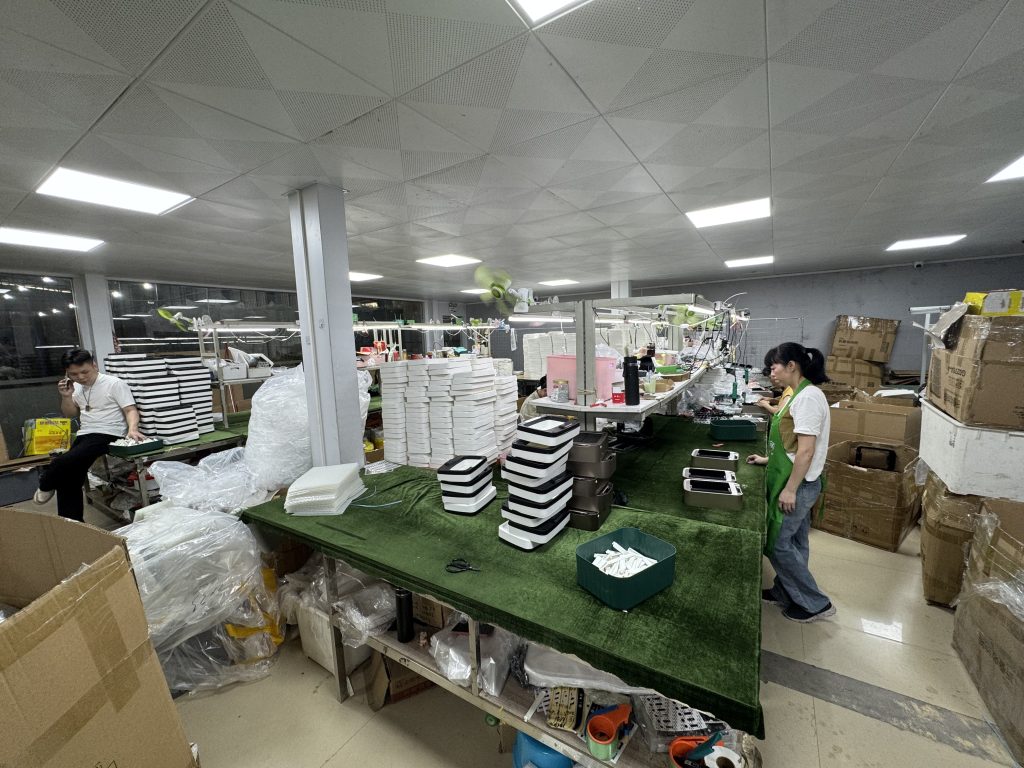
Ask the factory to walk you through their QC process on video — showing you each station, not just telling you about it. Our Quality & Testing page has more detail on what a thorough QC workflow looks like in practice.
QUESTION 5 — WHAT ARE THEIR MOQ AND LEAD TIME? THE BUSINESS REALITY CHECK
These two numbers define whether a supplier is realistic for your business model.
MOQ — minimum order quantity — varies by product type and customization level. For stock sensor trash cans with no customization, a typical MOQ from a mid-sized factory might be 100 to 300 units per model. Once you add custom colors, logo printing, or branded packaging, the MOQ typically rises — 500 to 1,000 units is common for OEM orders because the factory needs to justify setup costs for color mixing, mold changes, and packaging production.
Be wary of MOQs significantly below market norms — say, 50 units with full customization. That usually means either a trading company aggregating small orders, or corners being cut somewhere. A factory confident in its quality will often offer a trial order option: a smaller quantity at a slightly higher unit price, so you can validate the product before committing to a container load.
Lead time is the other half. Standard smart trash can production lead times from Chinese factories typically run 25 to 35 days for stock models and 35 to 50 days for OEM orders with customization. But seasonal factors matter: Chinese New Year (January / February) adds two to four weeks. The autumn peak — when factories rush to ship before Western holiday seasons — also stretches timelines.
Ask these specific lead time questions: What is the current lead time for a 500-unit order? How does that change for OEM? What happens during Chinese New Year? Do you offer expedited production? What is your sample lead time — and do you charge for samples?
On that last point: most factories charge for samples — typically the unit price plus shipping. Some refund the sample cost against your first bulk order, others do not. Clarify this upfront. If a factory refuses to send samples at all, even paid ones, that is a dealbreaker.
CONCLUSION — CHOOSING YOUR SMART TRASH CAN MANUFACTURER IN CHINA
Let me leave you with something practical. Print these out. Keep them next to your screen. Ask every supplier.
One — Are you actually a factory? Prove it with a live video tour.
Two — What certifications do you hold? Send me the certificates with test report numbers.
Three — Can you handle my OEM requirements? Show me past customization projects.
Four — What is your quality control process? Walk me through it, station by station.
Five — What are your MOQ and lead time? Be specific about current timelines, not best-case estimates.
The answers you get will tell you more about a supplier than any catalog or price list ever could. A smart trash can manufacturer in China that answers all five clearly and with evidence is one worth your next step.
To view more info, check:
· Smart Trash Can OEM vs ODM
· Sensor Testing & QC
If you are ready to start sourcing, visit www.touchlesstrashcan-oem.com or contact our export team. We answer all five questions upfront — because we believe the right buyer is one who asks them.
[…] works, visit our Quality & Testing page. If you’re still narrowing down suppliers, our guide on choosing a smart trash can manufacturer is a good next […]
[…] For the questions to ask on the first call, see our guide on choosing a smart trash can manufacturer. […]
[…] view more info, check:· How to Choose a Smart Trash Can Manufacturer· How to Import Smart Trash Cans from […]
[…] To view more info, check:· CE, FCC & RoHS Certifications· How to Choose a Smart Trash Can Manufacturer […]
[…] narrowing your list? Our guide on choosing a smart trash can manufacturer covers the questions to ask on the first […]
[…] appears when the low number comes with no breakdown, no sample, and no verifiable history. Read our guide on choosing a smart trash can manufacturer before you commit to any […]
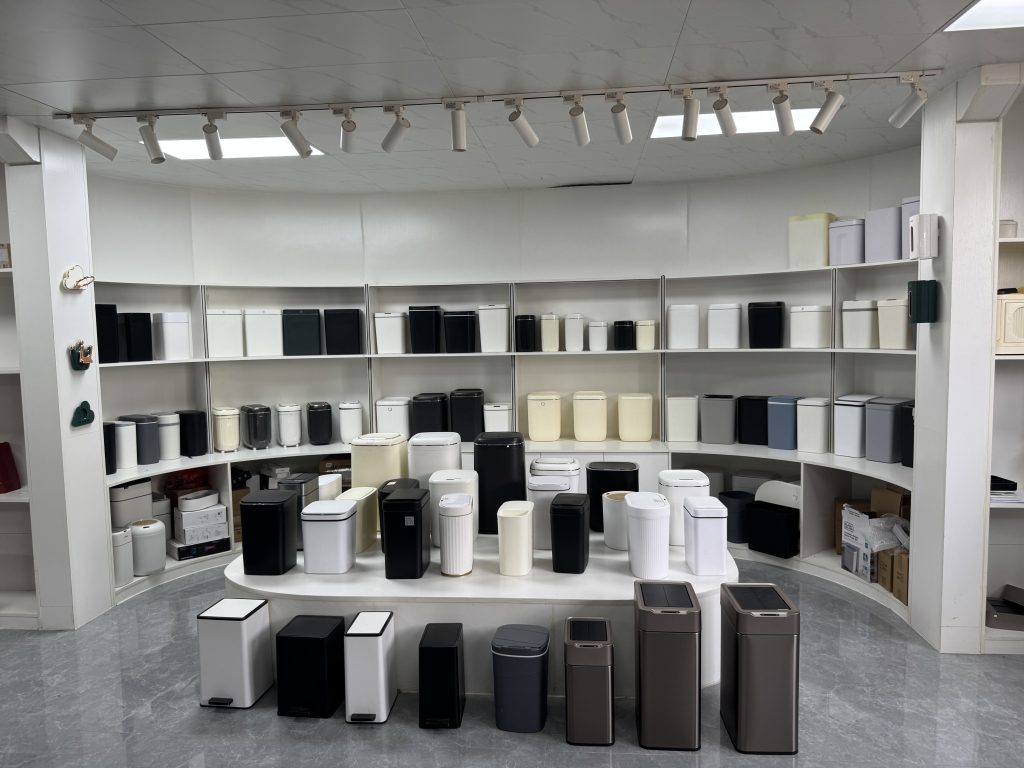
[…] with 76 models. We also send sample photos and specification sheets before you commit. Read our guide on choosing a smart trash can manufacturer, or reach out through the contact page for documents and a quote within 24 […]
[…] just protect the two things a reseller actually owns: cash and the ability to restock. Read our guide on choosing a smart trash can manufacturer before you commit to a supplier. Run this list on every new supplier, not just the first one, […]