 HeChuang
A trash can packaging damage report shows up in sourcing forums more often than most buyers expect. One Reddit buyer wrote that roughly 15 to 20 percent of his units arrived with damaged packaging. The product itself stayed fine. That pattern repeats in complaints about cheap foam, thin cartons, and careless stacking. This guide explains why packaging damage is a real cost. It also shows what good factory packing looks like, plus the five questions to ask before you order. You also get a simple routine for the day your container arrives.
Why Packaging Damage Is a Real Cost, Not a Small Annoyance
A damaged box is not just cosmetic. Retailers reject units with crushed corners, and marketplace warehouses flag them on arrival. One buyer on r/AmazonSeller described the exact situation. The item inside was fine, but the box looked beat. The units sat unsellable. When you lose 15 to 20 percent of a batch to packaging, that loss comes straight off your margin.
The cause matters too. Most transit damage is not the carrier’s fault alone; it starts on the packing line. A carton that fits loosely, foam that misses the corners, or a pallet stacked too high. All of it guarantees damage somewhere on the route. That is why the fix belongs at the factory, not at the delivery dock.
What “Damaged Packaging” Actually Looks Like
Not every damaged carton means a damaged product, so separate the two before you panic. The mild cases are cosmetic: a dented corner, a scuffed sleeve, a torn film bag. The product inside still works, and you can often sell it at a discount or keep it as a spare. The serious cases reach the product itself: cracked plastic, a bent lid, a sensor housing knocked loose. Most trash can packaging damage starts with those visible signs. It gets worse the longer the box sits in a warehouse. When you inspect a damaged shipment, photograph every affected unit first. That evidence decides who pays later.
How Chinese Factories Pack Smart Trash Cans (What Good Looks Like)
Packing quality varies more between factories than the price difference suggests. Take stainless steel models. At HeChuang Tech, each unit gets a foam cap on top and bottom. The body and lid sit inside a thin film bag, and the whole thing goes into a kraft paper carton. The foam caps do the heavy work, because they keep the lid and body from knocking together during loading. Plastic smart models follow a simpler routine: film bag plus kraft carton, no foam caps. The lighter shell tolerates the journey better. Custom color boxes are available when a buyer wants retail-ready packaging, and they are quoted per design. If a supplier cannot describe this chain in one sentence, that is a sign. They have not thought about it.
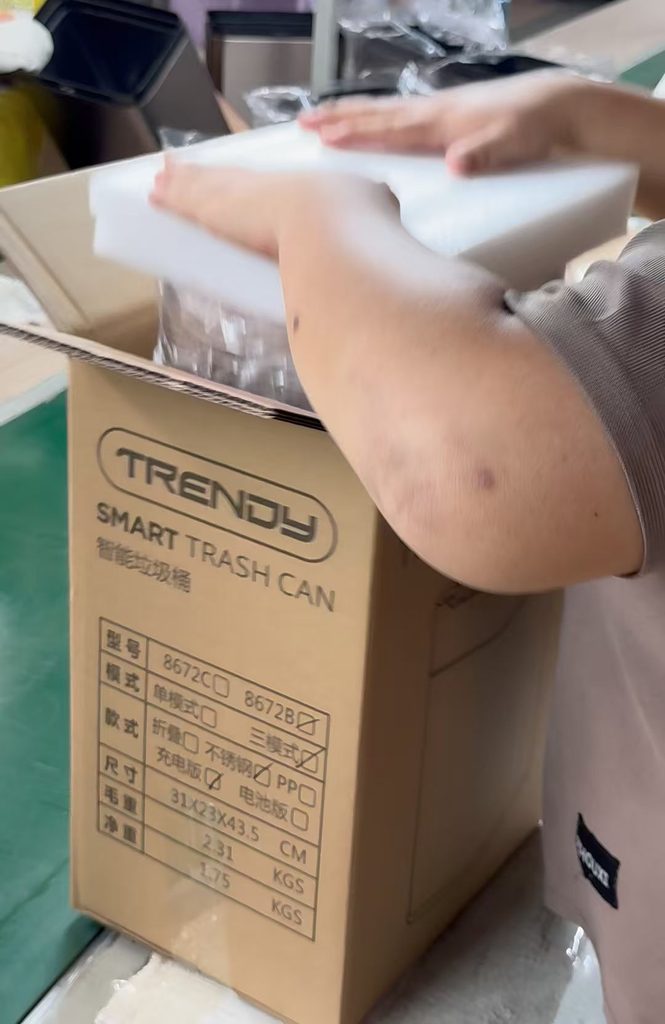
How to Prevent Trash Can Packaging Damage: 5 Questions to Ask Before You Order
Most trash can packaging damage is preventable, and prevention starts with five questions. Ask them before you sign the order, and write the answers into the contract.
Q1: What protects the unit inside the carton?
Ask for the exact parts: foam caps, film bags, inner trays, corner guards. If the answer is “standard export packing,” ask what that means in parts, not in slogans. Extra protection, such as corner guards on all eight carton corners, is available on request. The price adjusts with the packing spec.
Q2: What happens on the packing line?
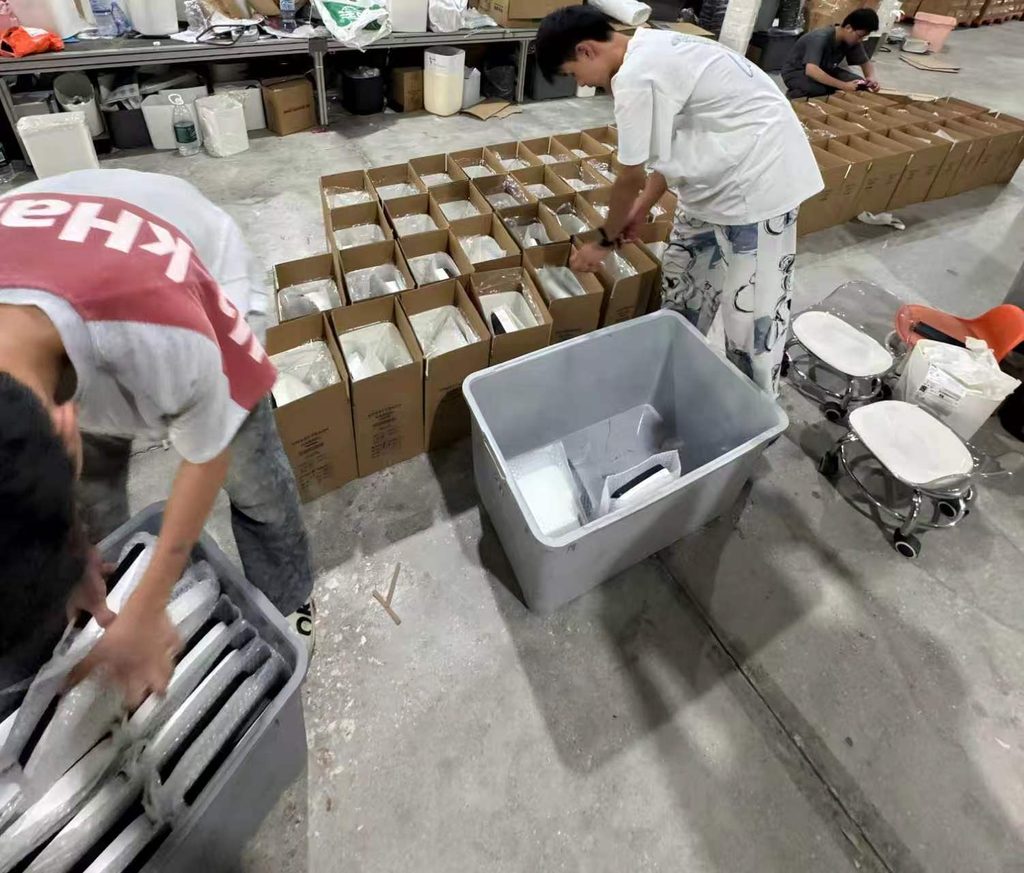
Do workers stack filled cartons on pallets, or do they toss them? Is the carton filled snug, or does the unit rattle inside? These details sound small, but they decide whether the shipment survives the fork trucks and the crane nets.
Q3: Is there a drop test or an open-box check before shipment?
A serious factory runs at least an open-box sample check on each batch. At HeChuang Tech, units are sample-checked and drop-tested before release. Buyers can visit, hire a third-party inspector, or run their own random checks. Formal transit standards exist too. Packaging engineers often refer to ISTA rules for drop and vibration testing, so ask your supplier which standard they follow. “We have never tested” is an answer in itself.
Q4: What happens if the shipment arrives damaged?
Clarify the boundary before you order. Damage found before the goods leave the factory is the supplier’s problem. Damage found after arrival at the port usually lands on the carrier. In practice, most ports require three things: a damage note on the delivery receipt, photos, and a quick claim. Our policy is the same: goods are checked before release, and arrival damage is settled through the carrier claim process.
Q5: Can I get custom retail packaging?
Color boxes, logo printing, and retail-ready designs are all possible. Each is quoted per design and per volume. A custom box changes the packing line and the freight cube. Ask for a packaging sample alongside your product sample, so you approve both together.
What to Check When the Container Arrives
A quick arrival routine protects your claim rights. Take photos of the pallet before anything moves. Count the units against the packing list, then sort the damage into “cosmetic” and “product-level” piles. Most trash can packaging damage claims fail for one reason: missing photos, so shoot everything first. Keep the outer cartons and the foam parts until the claim closes, because the carrier may ask to see them.
| Stage | Who is responsible | What to do |
| Before shipment (factory) | Supplier | Open-box check, photos of the loading, drop test records |
| In transit | Carrier | Note the damage on the delivery receipt at the port |
| On arrival | Buyer | Photograph, count, sort, and file the claim fast |
Frequently Asked Questions
These are the questions buyers ask us most after a rough shipment, and the answers stay deliberately plain.
Is 15 to 20 percent packaging damage normal?
That number appeared in one Reddit buyer’s report, and it gets repeated as if it were an industry average. It is not a statistic; it is one person’s experience with one supplier. Realistic packing keeps damage far lower. Any supplier who shrugs at a double-digit damage rate is showing you how they pack. Ask for their actual claim history instead.
Does a marketplace accept units with damaged packaging?
Marketplace warehouses are strict. Crushed boxes and torn sleeves often get flagged, returned, or removed before you can sell them. A few buyers re-box locally and sell anyway; most prefer to claim from the responsible side and move on.
Who pays when cartons arrive crushed?
It depends on when the damage happened. If the box left the factory intact, the carrier usually carries the claim. If the packing itself was weak, that part belongs to the supplier. The photos you took on arrival decide the case, so take them before anyone touches the pallet.
Do I need a third-party inspection for packaging?
Not for every order. An open-box check at the factory, your own visit, or a third-party inspection on the first batch gives you a baseline. It shows you how the supplier packs. After that, spot checks on later batches are usually enough.
Does stronger packaging raise the freight cost?
Yes, and that trade-off deserves a straight answer. Thicker cartons and inner trays add volume, so the freight cost creeps up with the cube. The right balance protects the unit without inflating the shipment. Our guide on smart trash can import costs shows how volume weight moves the total.
Packaging Is the Cheapest Insurance in Your Order
The five questions above cost nothing, and they belong in every quote comparison. When you build the full cost picture, our guide on smart trash can import costs shows the full split. For the factory side, our smart trash can factory page explains the production line. The factory audit checklist helps you verify claims on a visit or a video call. HeChuang Tech packs stainless models with foam caps and film bags. Plastic models get film bags and kraft cartons. We also support open-box checks, drop tests, third-party inspections, and custom color boxes. Or contact us with your target market and volume, and we will reply within 24 hours.
Leave a Reply