 HeChuang
A buyer in the r/AmazonSeller forum priced his express shipping at about $252 for 42 kg of cartons. His supplier then quoted $559 as a DDP price. He could not tell whether that figure included the duty, or who would pay it. That kind of confusion is common, and it gets expensive fast. This guide answers one question: under DDP vs FOB, who actually pays the duties? First it defines each term in plain words. Then it shows why DDP is where most import scams cluster. It compares the four common terms in a table, and it lists five things to settle before you order.
DDP vs FOB: The One-Sentence Difference
FOB (Free On Board) means the seller hands the goods over at the origin port. The buyer takes over from there, so freight, duty, and clearance all sit on the buyer’s side. DDP (Delivered Duty Paid) means the seller delivers to the buyer’s door with the import duty already paid. So one invoice covers the whole trip, and the buyer pays nothing at customs. That single difference decides who writes the check when the container arrives.
Here’s the part that trips up new importers: most Chinese trash can factories quote FOB by default. So when a supplier offers a low DDP price, buyers often treat it as a bargain. In practice, that low number is usually a warning sign. The Incoterms 2020 rules from the ICC define all 11 terms if you want the official text.
Why DDP Is Where Import Scams Cluster
The fear buyers describe is specific, and it’s fair. One importer said his DDP quote “seemed very reasonable,” but he worried the supplier “was not going to actually pay the tax and duty.” He asked for a DDU price instead, and the supplier replied: “We recommend using DDP. My freight forwarder has a strong ability of customs clearance.” That answer sounds reassuring, yet it never addresses the real question. Another buyer asked the same forum what he could do up front, because he had “heard some horror stories of the suppliers not living up to their bargain.”
DDP itself is a legitimate Incoterms rule, so it isn’t a scam on its own; the risk lives in execution, not in the term. A real DDP price has to cover freight, duty, and clearance, so it can’t be the cheapest number on the table. When it is, one of those blocks is missing or understated. Sometimes a supplier lowers the declared value to shrink the duty. That holds until customs checks it, and then the buyer absorbs the penalty and the delay.
This is the exact gap that made the $252-versus-$559 case so confusing. The buyer could see two numbers, but not what each one covered. So he had no way to judge either quote. That’s why the rest of this guide focuses on structure, not on price.
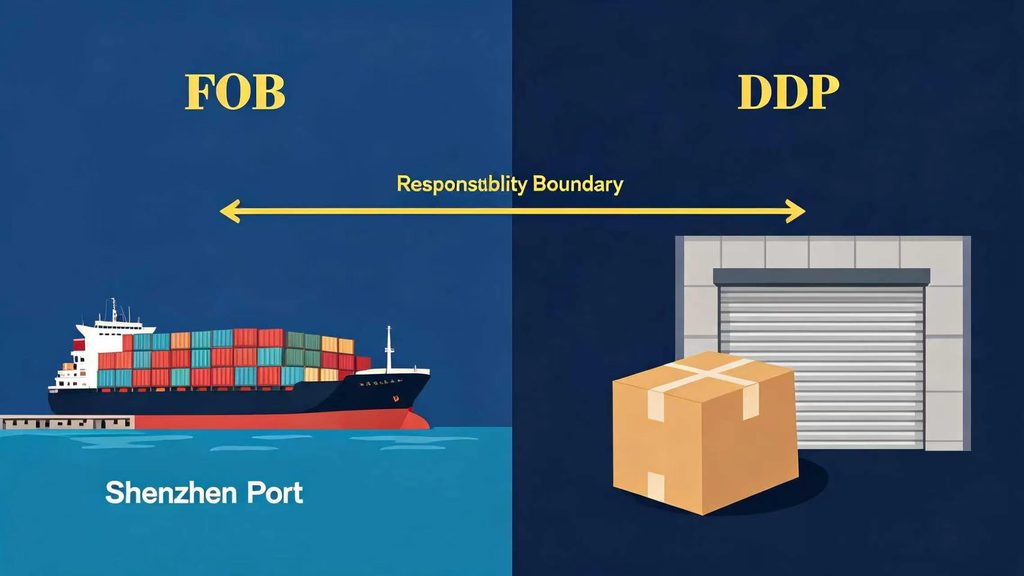
The Four Incoterms Compared
Four terms cover most trash can imports. The table below shows who pays what, and where the risk moves.
| Term | Seller pays | Buyer pays | Risk transfers |
| FOB | Goods to the origin port | Freight, insurance, duty, clearance | When goods load at the origin port |
| CFR | Goods plus ocean freight | Insurance, duty, clearance | When goods load at the origin port |
| CIF | Goods, freight, and insurance | Duty and clearance | When goods load at the origin port |
| DDP | Everything, door to door, duty included | Nothing at customs | At the buyer’s door |
One detail surprises almost every first-time buyer. Under CFR and CIF, the seller pays the freight, but the risk still passes to the buyer at the origin port. So if the ship sinks, the loss is yours even though the seller booked the vessel. Insurance covers that gap, and CIF includes it while CFR does not.
DAP sits between CIF and DDP: the seller delivers to your door, and you still pay the import duty. A buyer learned this after his supplier refused DDP. He knew the seller handled “everything except import duties, custom clearance taxes, local taxes and unloading,” but he couldn’t work out “when these taxes have to be paid.” Under DAP, that bill reaches you first, usually before the delivery clears.
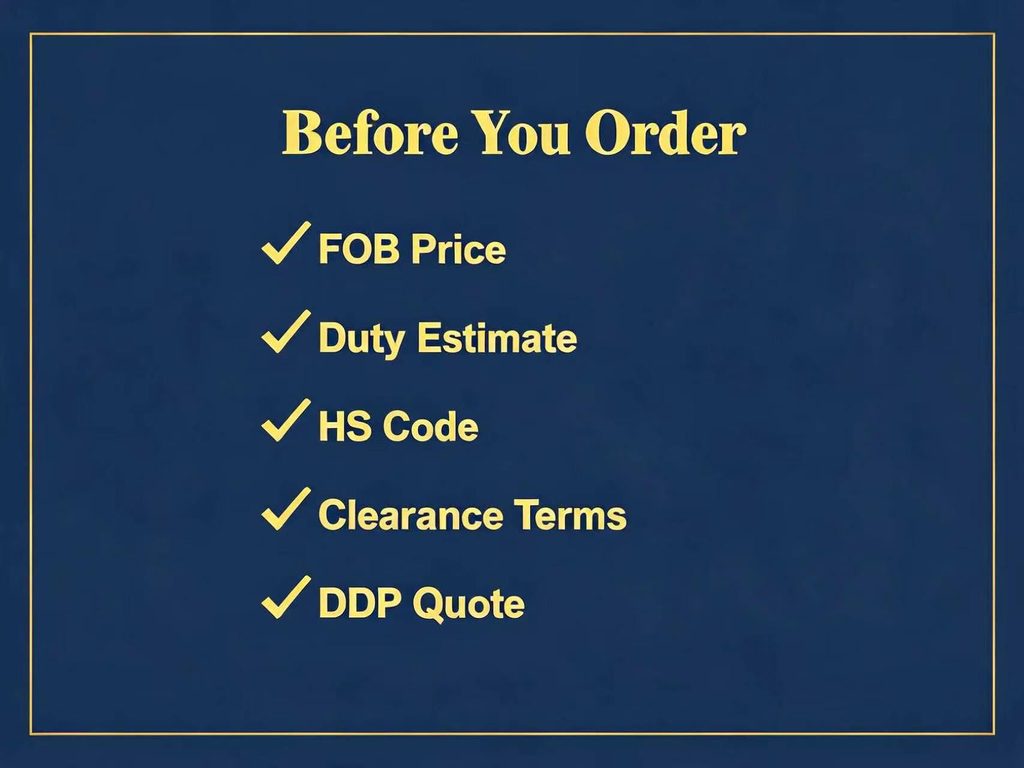
Five Things to Settle Before You Order
Terms only work when both sides agree on the details, so pin these down in writing before you commit to the order. Each one has burned a real importer.
Who pays the import duty
Get one line in the contract or the proforma invoice that names the term and states who pays duty. If the answer is DDP, the seller pays; if it’s FOB or DAP, you do. A verbal promise won’t survive a customs notice.
Who runs the customs clearance
Someone has to file the entry and clear the goods: under DDP the seller arranges it, while under FOB the buyer does, often through a broker. Ask who files, and ask for the broker’s name, because a missing broker is how shipments sit at port for weeks.
What port and terminal fees are excluded
Port charges, terminal handling, and delivery to your address are small lines that add up, and they vary by country and by port. So ask the seller to list what the price excludes, not just what it includes.
How currency swings affect the final price
Trash can quotes are usually in US dollars, and factories pay their costs in yuan, so a DDP price quoted months ahead can shift when the exchange rate moves. Ask whether the price is fixed, and for how long.
What proof shows the duty was paid
Under DDP, ask what document proves the duty cleared; a customs receipt or a clearance entry does that job. If a supplier can’t produce one, treat the DDP promise as unverified.
Where to Verify the Duty Before You Choose a Term
You can check the duty yourself, and you should. Access2Markets covers the European Union, and it’s free and official, while the US HTS database does the same job for the United States. You need the HS code your supplier ships under, because the rate depends on it. Then compare the FOB price plus your own duty estimate against the DDP quote, because that comparison shows whether the DDP number is real. That comparison is really a landed-cost check, and our guide on smart trash can import costs shows the full breakdown.
Which Term Fits a Trash Can Order?
Match the term to the shipment, not to the mood of the negotiation. For a full container of trash cans, FOB or CIF usually works best, because you control the freight forwarder and keep the duty visible. For samples and small urgent reorders, DDP is often simpler: the shipment is small, the duty is small, and one door-to-door price saves you the customs setup. In short, volume orders reward control, and small orders reward convenience.
Frequently Asked Questions
Is DDP safer than FOB for a first order?
DDP is simpler, not automatically safer, because it removes the customs work from your plate but hides the duty inside one number. So verify the duty is actually paid. FOB gives you more control and more homework, so pick based on how much customs work you can handle.
Can a supplier refuse DDP?
Yes, and some do, because DDP needs a strong freight forwarder and real cash for the duty. When a supplier says no, DAP is the usual fallback, where the seller delivers to your door and you pay the duty.
Who pays if a DDP shipment arrives with unpaid duty?
You do, in practice, because customs bills the importer of record, and that’s usually the buyer. You can chase the supplier later, but the goods stay at port until the duty clears, so the money leaves your account first.
Is DDP always more expensive than FOB?
The DDP number looks higher, because it bundles freight, duty, and clearance. So compare it with your own landed cost, not with the bare FOB price. A real DDP quote often beats a cheap FOB quote once you add the missing lines.
How do I compare an FOB quote with a DDP quote?
Ask both suppliers for the same structure: FOB price, packed dimensions and weight, freight method and cost, HS code, a duty estimate, and clearance terms. Fill one table with both quotes, then compare the totals, not the headline prices.
What does DDP not cover?
DDP covers delivery with duty paid, but it doesn’t cover damage in transit, so you may still want cargo insurance. It also doesn’t cover demurrage if the goods sit at port, so read the contract for both.
Get a Clear Answer on Who Pays the Duty
The $252-versus-$559 question has a simple fix. Ask for one term in writing, and compare complete quotes. HeChuang Tech runs a 30,000 m2 factory with 43 production machines, 150+ staff, and CE, FCC, and RoHS certifications. We quote FOB or DDP, so you can see the duty inside one number or handle it yourself. Our guide on how to import smart trash cans from China walks through the whole process, and our trash can wholesale guide covers pricing. Or contact us with your target market and volume, and we’ll reply within 24 hours.
Leave a Reply