 HeChuang
You can cut your landed cost by 30–50% when you buy smart trash cans straight from a Chinese factory instead of a middleman. The catch: one bad supplier can eat those savings, and a container load is too expensive to fix after it lands. This guide shows how to import smart trash cans from China without the expensive mistakes. You’ll learn what to spec, how to check a factory, and what to lock in before you pay.
Step 1. Lock Down the Spec Before You Contact Factories
Vague specs get vague prices. A one-page spec is the fastest way to get quotes you can actually compare. If two factories quote different products, the lower price means nothing.
- Sensor type: infrared, touchless motion sensing, or a press-type foot pedal
- Capacity: 12L–50L for homes, or larger commercial bins
- Material: ABS, PP, or stainless steel
- Target market and the certificates it needs (CE, FCC, RoHS)
- Target landed cost and shelf price
Write down the battery type and expected cycle life too. These details change the unit price more than most buyers expect.
Ask the factory to confirm the spec in writing before they quote, so every price covers the same product.
Start from the standard configurations on the products page and adapt them to your market.
Step 2. Shortlist Factories, Not Trading Companies
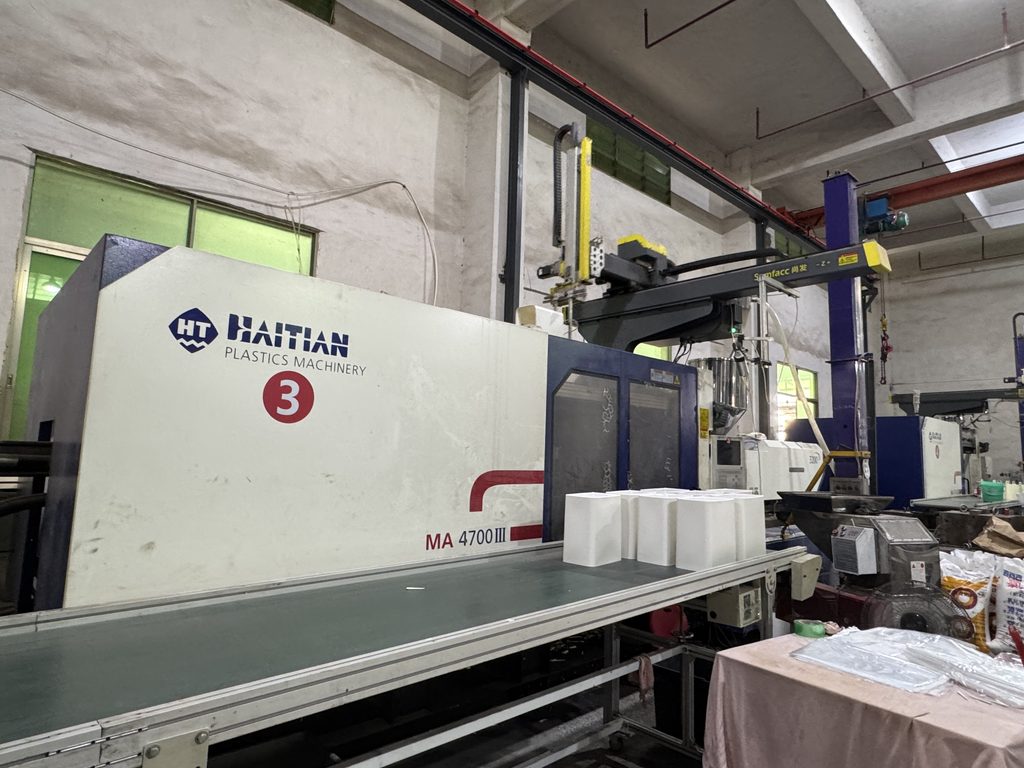
Traders add margin without adding control. You want the factory that owns the production line. A trading company can still be fine for small orders, but for repeat volume you want the plant itself.
- Search for “smart trash can manufacturer” rather than “supplier”
- Ask about factory size, machine count, and QC staff
- Confirm export experience to your market (EU, US, Japan, Korea)
- Ask how many years they have made this exact product
- Ask for a video tour of the production line, not just the showroom
- Check whether the business license lists manufacturing, not trading
Good factories welcome this; traders stall.
For the questions to ask on the first call, see our guide on choosing a smart trash can manufacturer.
Deciding between private label and full custom design? Our OEM vs ODM explainer spells out the difference.
Step 3. Check Certifications Before You Order Samples
A certificate that belongs to a trading company is not your certificate. Make sure the factory’s own name appears on the test report. Ask for the report number, then look it up yourself. A real lab lets you verify the document.
- CE and RoHS for the EU
- FCC for the US
- UL or ETL for some electronics buyers
CE covers safety and EMC. RoHS limits hazardous substances. If a supplier tells you one certificate covers everything, be careful.
The FCC keeps a public equipment authorization database where you can look up filings.
Our certification explainer covers what CE, FCC, and RoHS actually require.
Step 4. Get Samples and Comparable Quotes
Two or three samples tell you more than fifty spec sheets. Test the sample the way your customer will use it: sensor speed, lid strength, and how the plastic feels after a month.
- Order samples from at least two factories
- Ask every factory for the same quote format: FOB price, MOQ, lead time, packaging, tooling cost
- Confirm the sample and mass production use the same components
- Ask if sample shipping is refunded against your first order
Keep the winning sample. It becomes the reference standard if a later batch looks different.
For custom branding and packaging, the OEM/ODM page lists what most factories can change.
Step 5. Agree on Payment and Terms in Writing
Never pay for a first order without a written quality standard. That’s where most disputes start. Put the AQL, packaging spec, and delivery date in the contract, not just in a chat message.
| Item | What to ask | Typical answer |
| Incoterm | Who pays freight and insurance | FOB is standard |
| MOQ | Minimum order per model or color | 100–500 pcs trial |
| Payment | Deposit and balance | 30/70 T/T |
| Lead time | Production after deposit | 20–35 days |
| AQL | Acceptable defect level | 1.5–2.5 |
T/T is the normal route: a 30% deposit to start production and the balance before the goods leave the factory. L/C adds cost but suits larger orders.
Agree on packaging early too, because a weak carton causes more damage claims than the product itself.
Step 6. Inspect Before It Ships, Not After It Lands
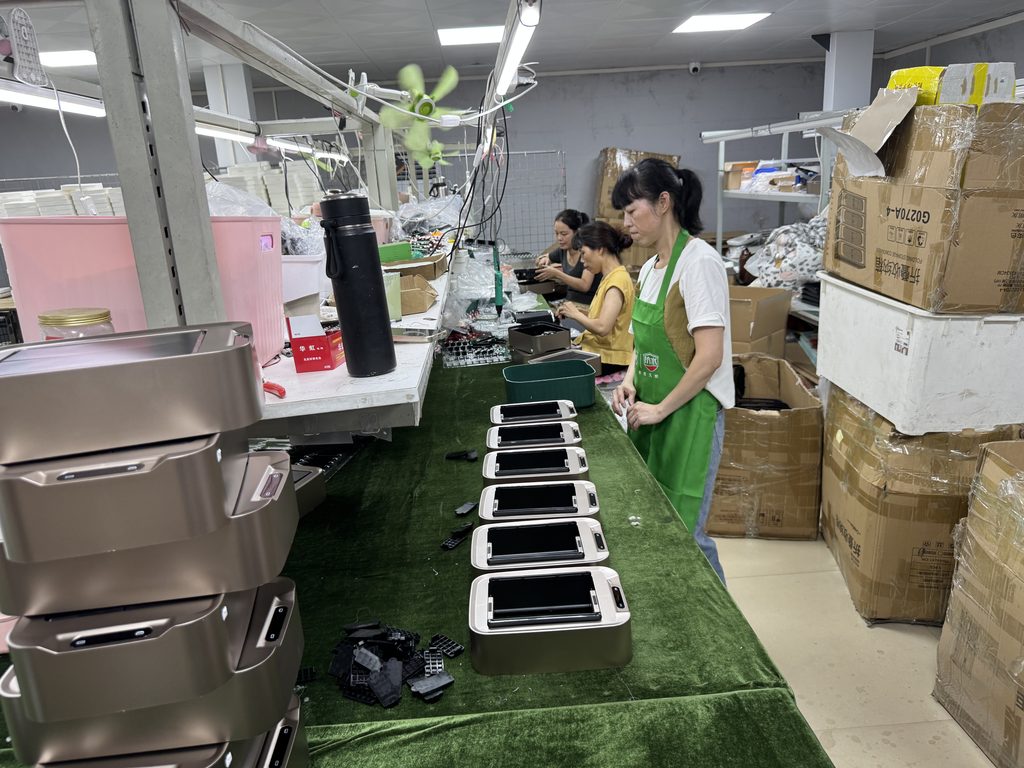
The cheapest insurance in importing is a third-party inspection on your first order. For a few hundred dollars, an inspector checks a random sample and sends you photos before you release the balance.
- Sensor response time and sensing range
- Open/close cycle test on the motor and hinge
- Material check: real 304 stainless, not 201
- 100% sensor trigger before loading
- Carton drop test and label check
Book the inspection for when roughly 80% of the order is packed, so the inspector sees finished goods.
Our QC testing article shows the exact checks a good factory runs on every batch.
Step 7. Plan Shipping, Customs, and Duties
Duties are a number you can look up before you buy, and you should. Your freight forwarder can quote door-to-door, or you can buy FOB and handle the ocean leg yourself.
- Confirm the HS code for the can and any electronics
- Prepare the invoice, packing list, bill of lading or air waybill, and certificate of origin
- Compare sea freight and air freight by volume and urgency
- Ask your forwarder about insurance, port charges, and last-mile delivery
Sea freight is cheaper per unit once your order fills a decent part of a container; air freight wins on speed, not price.
The EU Access2Markets tool shows the duty rate for your product code.
Common Mistakes When You Import Smart Trash Cans from China
Here’s what trips up first-time importers.
- Picking the lowest quote without checking the factory
- Skipping the third-party inspection on the first order
- Assuming a trading company is a factory
- Ignoring certificate validity and test reports
- Leaving AQL and inspection terms out of the contract
None of these are hard to avoid. Most of them come down to slowing down before you send the deposit.
A Quick Import Checklist
Print this and keep it by your desk for the first order.
- One-page product spec written
- At least two factories shortlisted
- Certificates verified in the factory’s name
- Two or three samples ordered
- Quotes in the same format
- MOQ and lead time agreed
- AQL and packaging spec in the contract
- 30/70 T/T payment terms confirmed
- Third-party inspection booked
- HS code and duty rate checked
- Freight and insurance quoted
- Certificate of origin prepared
Frequently Asked Questions
How much does it cost to import smart trash cans from China?
Unit price depends on the spec, MOQ, and Incoterm. Get at least three FOB quotes because factories in the same region can differ 20–30% on the same drawing. Add freight, insurance, and duties on top to get your true landed cost. Cheaper FOB prices often hide higher freight or softer quality, so compare the full landed number, not just the unit price.
What is the typical MOQ for smart trash cans?
Many factories accept a 100–500 piece trial order per model. Unit cost drops noticeably at 2,000 pieces and above because setup and tooling get spread across more units. Some factories split MOQ across colors, which helps when you are testing a new market.
How do I verify a Chinese factory is reliable?
Check the business license, export record, and certificates, then order samples and book a third-party pre-shipment inspection. A factory that refuses a video tour or inspection is a red flag. A short factory audit is worth it before a large deposit.
Which certifications do I need to import smart trash cans?
CE and RoHS for the EU, FCC for the US. Some electronics buyers also ask for UL or ETL. Ask for test reports that carry the factory’s own name and verify the report number yourself.
How long does shipping from China take?
Sea freight to the US or EU usually runs 25–40 days. Air freight lands in about 7–10 days but costs several times more. Volume and urgency decide which one makes sense. If you need stock fast, air freight works for a small trial order.
How to import smart trash cans from China without losing money comes down to three things: a locked spec, a verified factory, and a written quality standard.
Get a Factory-Direct Quote
Need a landed-cost estimate for smart trash cans? HeChuang Tech runs a 30,000㎡ factory with 43 production machines, CE/FCC/RoHS certificates, and flexible MOQ. Send your spec through the contact page and we’ll reply within 24 hours.
Leave a Reply