 HeChuang
Smart trash can wholesale is where most resellers make or lose their margin. This guide explains smart trash can wholesale in plain terms: how trade pricing works, how to buy in bulk without overstocking, and how to protect your profit per unit.
You don’t need a giant warehouse to buy wholesale. You need the right quantity, the right landed cost, and a supplier that prices its tiers honestly. Work through the sections in order, because each one feeds the next. In short, wholesale rewards buyers who plan the numbers first and negotiate second.
What Does Smart Trash Can Wholesale Mean?
Wholesale means buying goods at a trade price and reselling them, usually in bulk and below retail.
Wholesale is the middle of the supply chain. The factory sells to you at a trade price, you sell to your customers at retail, and the gap between the two is your margin. For smart trash can wholesale, that usually means ordering enough units to reach a lower per-unit price. That said, the term is loose. Some sellers use it to mean factory-direct bulk, while others use it for a small distributor markup. Know which one you are dealing with, because the difference shows up in your landed cost. A wholesale price always sits below retail, but it is not a fixed number. It moves with your quantity, your payment terms, and how much work you are willing to take on.
Wholesale vs Retail: How the Margins Work
Your profit lives in the gap between the wholesale price and the price your market will actually pay.
A smart trash can that costs you in the low teens at wholesale might sell for thirty to forty dollars online. That sounds generous, but shipping, customs, storage, returns, and payment fees all eat into it. In practice, a healthy margin often starts around three times the landed cost, then narrows once you add advertising. The real test is not the sticker price; it is the price you can repeat at volume. Calculate your margin on the total landed cost, not on the factory price, because that is where most first-time buyers quietly lose money. Even a perfect product can lose money if the shipping route is wrong, so compare sea, air, and courier costs on the same order before you pick a supplier. Some categories run tighter, and smart trash cans are no exception, so build your pricing before you fall in love with a model.
How Wholesale Price Tiers Work
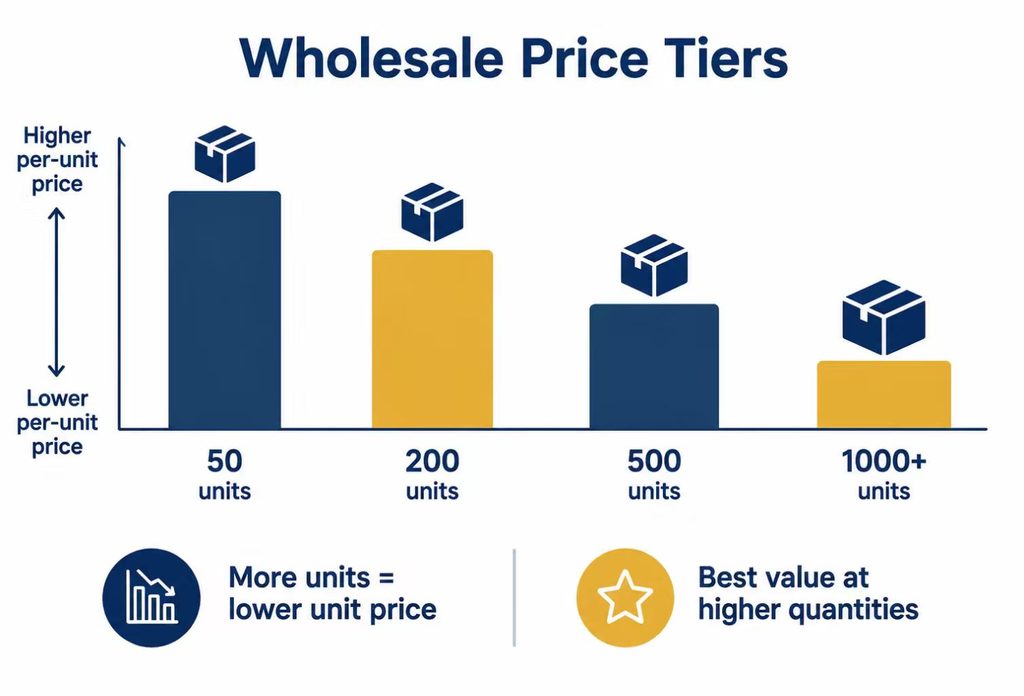
Wholesale prices fall in steps: more units means a lower per-unit price.
Most factories publish tiered pricing, like 50, 200, 500, and 1,000 units. Each step brings a bigger discount because setup and shipping spread over more units. For example, 100 units might cost in the mid-teens each, while 500 units drop a couple of dollars. That’s why the cheapest per-unit price is not always the smartest order. Buying 500 to save a couple of dollars each is only a win if you can sell all 500. Match your first order to what you can turn in a season, and read our low MOQ guide if the minimum is the part holding you back. Ask the factory to confirm whether the tier applies to one model or a mixed cart, because some suppliers only honor the discount on a single SKU.
Factory-Direct vs Middleman Wholesale
Factory-direct is usually cheaper, but a middleman can still earn its fee on speed and service.
Buying from the factory cuts out the distributor margin, so your per-unit cost drops. The trade-off is that you’re handling the communication, the samples, the QC, and the shipping yourself. A trading company or middleman charges more, but it can bundle suppliers, handle paperwork, and speak your language on time zones. A middleman can also help with dropshipping and smaller repeat orders, which suits a brand testing the market. If you want custom branding or a private label, you go factory-direct, because a middleman rarely holds the molds. Before you commit, work out whether the middleman’s fee buys you enough time and safety. Our OEM vs ODM explainer covers the customization side in more detail. For a first order, many brands start with a factory that offers samples, then keep a middleman in reserve for urgent refills.
How to Calculate Your Landed Cost and Margin
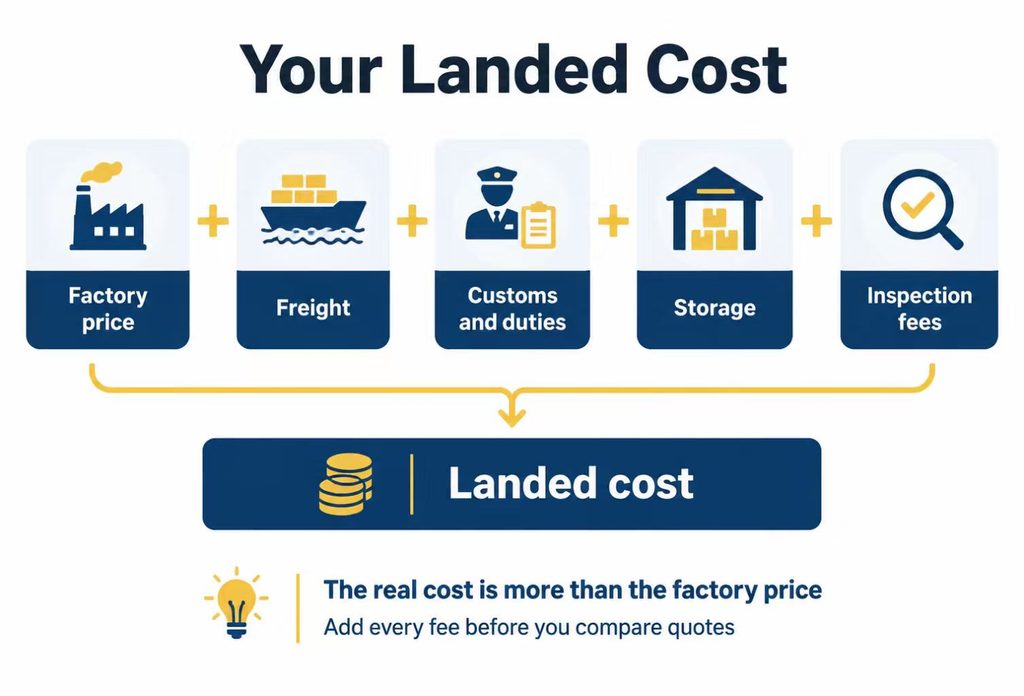
Landed cost is the real price of a bin, and margin is the only number that matters.
Add the factory price, shipping, customs, duties, storage, and any inspection fees. That total is your landed cost. Then subtract it from the price your market pays, and you have your margin. Many first-time importers forget duties and storage, and those two lines can quietly turn a 3x margin into a 2x one. In practice, a good wholesale order wins on the landed cost, not the factory quote, because a cheap quote with expensive freight is no bargain. Ask every supplier for the same terms, FOB or EXW, so the quotes line up. If the terms are new to you, check the official import guidance before you compare. Get the numbers in writing before you pay, because a verbal estimate rarely survives customs. If you sell through a marketplace, add its commission too, because that fee comes out of the same margin.
Wholesale Buying Checklist
A good wholesale order runs on a short checklist, not on hope.
Before you send a deposit, run the list below. It keeps the common mistakes out of the shipment.
| Check | Why it matters |
| Verified license and certificates | Confirms the factory is real |
| Sample in hand, not just photos | Catches quality before bulk |
| Tiered price in writing | Locks the margin |
| Landed cost quoted, not factory price | Shows the real cost |
| Lead time with a date | Avoids stockouts |
That said, none of these items are hard. They just protect the two things a reseller actually owns: cash and the ability to restock. Read our guide on choosing a smart trash can manufacturer before you commit to a supplier. Run this list on every new supplier, not just the first one, because pricing and service drift over time.
Frequently Asked Questions
What is a good wholesale price for smart trash cans?
It depends on the model and quantity, but many resellers land in the low-to-mid teens of dollars per unit at factory-direct wholesale for a standard sensor model. Custom features and branding push it higher.
How many units do I need to buy wholesale?
A first wholesale order usually starts around 50 to 200 units for a stock model. You can order less, but the per-unit price climbs because setup costs spread over fewer units.
Is it better to buy wholesale from a factory or a trading company?
Factory-direct is cheaper and gives you control over branding and QC. A trading company costs more but can bundle suppliers and handle paperwork, which helps if you are new to importing.
How do I know if a wholesale quote is fair?
Compare quotes on the same terms, FOB or EXW, and add freight, duties, and fees to get the landed cost. A quote that looks cheap but hides freight is not fair.
What is the biggest wholesale mistake first-time buyers make?
Ordering too many units to chase a lower per-unit price, then sitting on stock. Buy what you can turn in a season and reorder once the market proves the model. A model that moves slowly at any price is the real problem, not the discount you missed.
Get a Factory-Direct Wholesale Quote
Wholesale is simple math: buy at a price your market will support, and never let a bulk discount trick you into overstocking.
HeChuang Tech runs a 30,000㎡ factory with 76 models, and we price in clear wholesale tiers from 50 to 1,000+ units. Tell us your market and monthly volume through the contact page, and we will send a sample-first quote with landed-cost help within 24 hours.
[…] Our guide on how to import smart trash cans from China walks through the whole process, and our trash can wholesale guide covers pricing. Or contact us with your target market and volume, and we’ll reply within 24 […]
[…] RoHS certifications, and we quote FOB or DDP in one pass. See how wholesale pricing works in our trash can wholesale guide, or contact us with your target market and volume. We reply within 24 […]