 HeChuang
Why Smart Trash Can Certifications Matter Before You Compare Prices
Smart trash can certifications are one of the few sourcing topics where a missing document can cost you the entire order. Most buyers treat compliance as a checkbox after the price negotiation. In practice, it belongs at the front of the conversation. It decides three things: whether your container clears customs, whether marketplaces like Amazon let you sell, and whether a defect or spot check turns into a recall on your profit-and-loss statement.
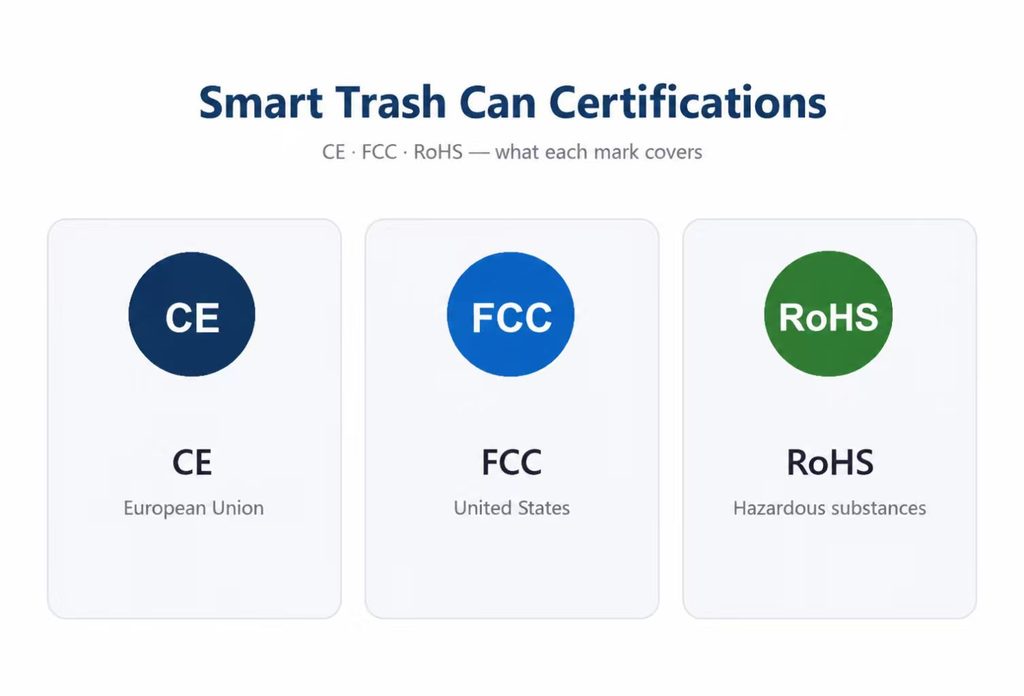
This guide explains the three marks importers ask about most: CE, FCC, and RoHS. You’ll learn what each one covers and which documents to request before you pay a deposit.
The cost asymmetry is what makes this worth doing early. A missing certificate rarely shows up in the quoted unit price. It shows up later — as a held container, a delisted listing, or a costly recall notice. The rule is simple: CE opens the EU, FCC covers the US, and RoHS applies anywhere you sell electronics.
CE — The Entry Ticket for the European Market
CE is the conformity marking the European Economic Area requires for most products. For a smart trash can, that usually means the Electromagnetic Compatibility (EMC) Directive, the Low Voltage Directive (LVD), and RoHS. Regulators do not see a sensor trash can as a “simple product.” It has an infrared sensor, a control circuit, and a motor. Each part brings an EMC obligation: the device must not cause interference, and it must tolerate interference without misbehaving.
The detail most first-time importers miss: CE is not a single certificate from one laboratory. It is a marking backed by a technical file and a Declaration of Conformity (DoC). The party that places the product on the EU market signs the DoC. A test report supports the DoC, but the DoC is what makes the marking valid. When you import, that responsibility usually shifts to you as the importer of record. That is why you should never accept a supplier who says, “CE? No problem, we’ll just add the mark.”
Market surveillance and documentation requests are now routine. A customs officer or Amazon reviewer can ask for the DoC at any point after the goods ship. So the file must exist before you book the container.
FCC — The US Requirement for Electronic Devices
For the US market, the relevant framework is FCC Part 15. A smart trash can is an electronic device. Its sensor board and motor controller are digital circuits, and the rules class them as “unintentional radiators.” Most infrared sensor trash cans without an RF module use the Supplier’s Declaration of Conformity (SDoC) route. The supplier tests to the Part 15 limits and keeps the report on file. Battery power does not create an exemption. The digital circuitry is what triggers the obligation.
If a model includes Bluetooth or another wireless function, the requirement changes. That device is an intentional radiator and needs an FCC ID — a different, more involved process. The practical takeaway: know whether your model is IR-only or includes RF. The paperwork is not interchangeable.
This is not only a customs issue. US marketplaces request FCC information when you list an electronic product. Without the right test report, you can lose a listing before selling a single unit.
RoHS — The Substance Restrictions Buyers Skip
RoHS (Restriction of Hazardous Substances) limits ten substances in electrical and electronic equipment. They include lead, mercury, cadmium, hexavalent chromium, and certain flame retardants and phthalates. The risk in a trash can lives in the components: solder, wire insulation, plastic pigments, and battery contacts. A unit can pass a basic function test and still fail a RoHS spot check because a sub-supplier switched to a cheaper solder or pigment.
In the EU, RoHS comes bundled with CE. Outside the EU, many buyers and platforms still expect a RoHS report. Amazon compliance teams and corporate procurement departments ask for it routinely. If a supplier cannot show a RoHS report tied to your model, treat that as an open item before ordering. A reliable supplier can trace this to the component level. They can show that the restricted-substance data covers the exact parts in your build — not just a generic family declaration.
The Documents to Request Before You Pay a Deposit
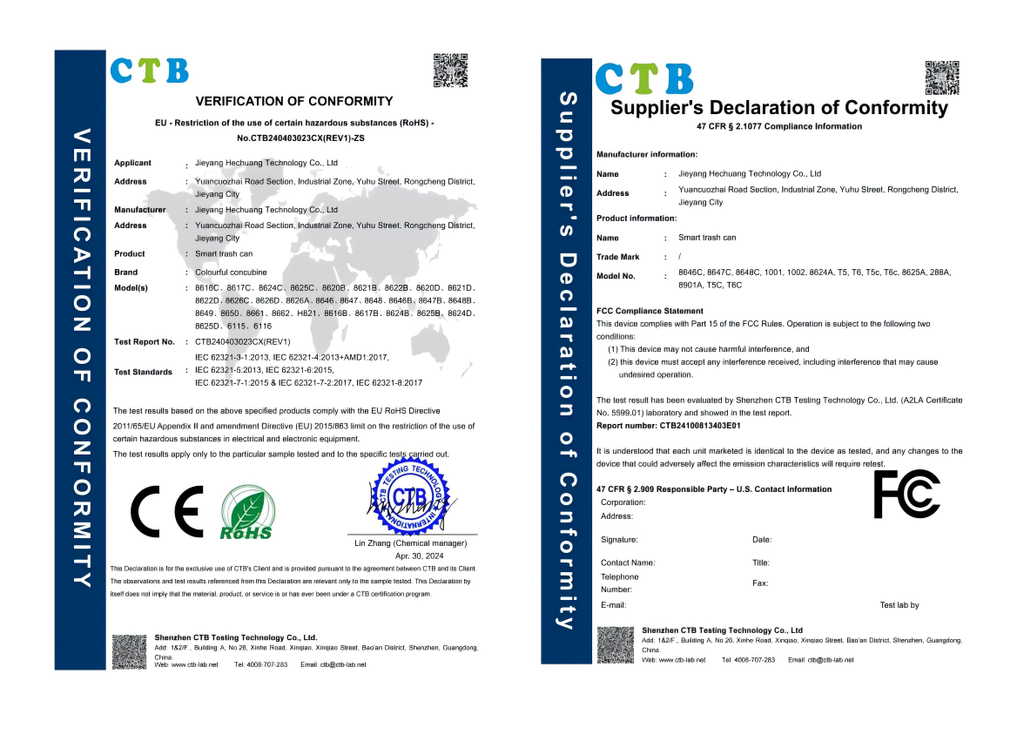
CE FCC RoHS trash can documentation should come as three sets of files — not just a logo on a spec sheet:
- CE: a test report (EMC/LVD/RoHS) plus a Declaration of Conformity that clearly names the product model.
- FCC: a Part 15 test report and an SDoC — or an FCC ID if the model has RF.
- RoHS: a laboratory material test report that covers the restricted substances and matches the actual model and components.
Then verify three things. First, check the report number and the issuing laboratory. You can verify a report from a recognized lab, but you cannot verify a scan that merely “looks like a report.” Second, confirm the report’s model number matches the model you are buying, not a sibling product. Third, check that the certificate is current. RoHS standards and FCC rules have both changed over the years, and an old report may not cover current production. Keep your own copies. Treat “we can get it after you order” as a red flag. Produce compliance documents before the goods ship, not after.
Three common mistakes: accepting a supplier’s word without a report, buying a report for one model and shipping a different one, and letting a certificate expire without noticing. You can avoid all three with a five-minute document check before the deposit.
If your destination market has its own scheme — UKCA in the UK, KC in South Korea, or PSE in Japan — raise it before you commit. No supplier holds every regional certificate, and that is normal. They just need to be transparent about what exists and what they would still need to arrange.
How HeChuang Verifies Compliance Before Shipping
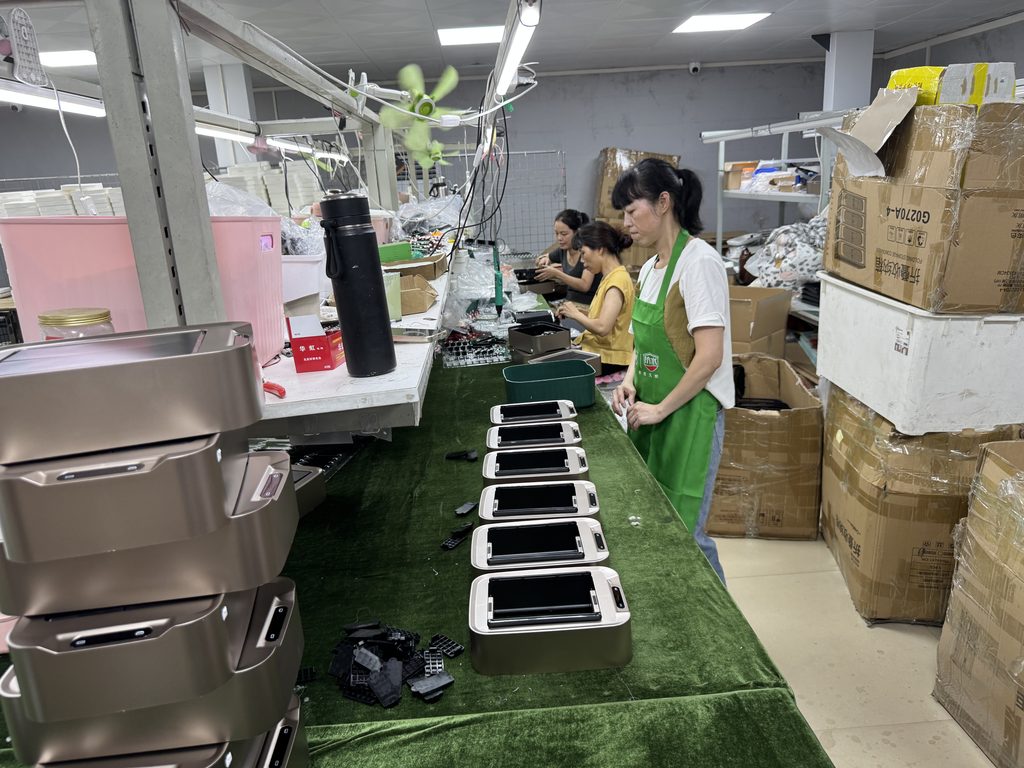
Documentation only matters if it matches what the line actually builds. At HeChuang, the compliance check runs alongside the physical quality control process: incoming component inspection, first-piece confirmation, in-line checks, final function testing, aging tests, and pre-shipment inspection. We function-test the sensor, lid mechanism, and power system on every unit before packing — we do not just spot-check them visually.
For certification specifically, we keep the CE, FCC, and RoHS test reports tied to the model you are buying. That paperwork proves trash can compliance. We also welcome third-party inspection when your buying process requires it. If you want to see how testing works, visit our Quality & Testing page. If you’re still narrowing down suppliers, our guide on choosing a smart trash can manufacturer is a good next read.
Conclusion — Compliance First, Then Pricing
Smart trash can certifications are the difference between a cheap order and a cheap order that never clears customs. Request the CE, FCC, and RoHS documents early. Confirm they match your model, and keep your own copy before the goods ship. That single habit removes most of the risk importers lose sleep over.
Ready to check compliance on a specific model? Browse the certified range on our Products page. Or Contact us and tell us your market. We’ll confirm which certificates apply and send the documents together with your quote.
To view more info, check:
· Sensor Testing & QC
· How to Import Smart Trash Cans from China
Leave a Reply